Revenue You Might Earn with AC Chargers
Revenue Potential from AC EV Chargers
EV chargers are no longer just a “nice amenity.” Done right, they’re a revenue engine, a customer magnet, and a property value booster. Level 2 (L2) chargers (7–19 kW) are designed for longer dwell times: multifamily garages, workplaces, hotels, golf courses, campuses and “linger-friendly” retail.
Direct charging revenue
practical math
Because L2 delivers energy more slowly, per-session charging revenue is smaller—but hardware and installation costs are lower than DC.
Order-of-magnitude examples:
-
Example A – Light public use
-
1 paid session/day
-
10 kWh/session
-
Price: $0.30/kWh
-
→ ~$3/day (~$1,000/year) per port
-
-
Example B – Moderate use
-
2 sessions/day
-
20 kWh/session
-
Price: $0.35/kWh
-
→ ~$14/day (~$5,000/year) per port
-
Independent ROI tools and state business-case studies usually land in the same ballpark: hundreds to several thousand dollars per port per year in direct revenue, depending on actual utilization and pricing.

Multifamily: monthly fees and rent lift
In multifamily, Level 2 chargers are often monetized through paid parking and higher rents, not just pay-per-kWh:
-
Multifamily EV reports and provider case studies show buildings charging roughly $25–$200/month for a dedicated EV space, depending on market, plus any per-kWh usage fees.
-
EV-friendly buildings frequently see better lease-up, higher-income residents and improved retention, which supports rent premiums.
Example (illustrative):
-
10 reserved EV spaces at +$75/month
-
→ $750/month (~$9,000/year) in recurring revenue
-
Plus energy charges and the value of lower vacancy and turnover.
Workplace: HR & ESG value, plus optional cost recovery
Workplace charging is often viewed as an employee benefit and ESG tool:
-
DOE’s Alternative Fuels Data Center and Charge@Work initiative highlight that workplace charging improves employee satisfaction, talent attraction and retention, and makes EV ownership practical for staff.
Typical patterns:
-
Free or subsidized charging during working hours
-
Modest session or kWh fees later in the day
-
Payroll deductions or paid parking tiers to recover some costs
Even when direct charger revenue is small, the impact on HR costs, brand, and ESG metrics can be substantial.
Media, Advertising & Outreach: Turning Screens into an Extra Asset
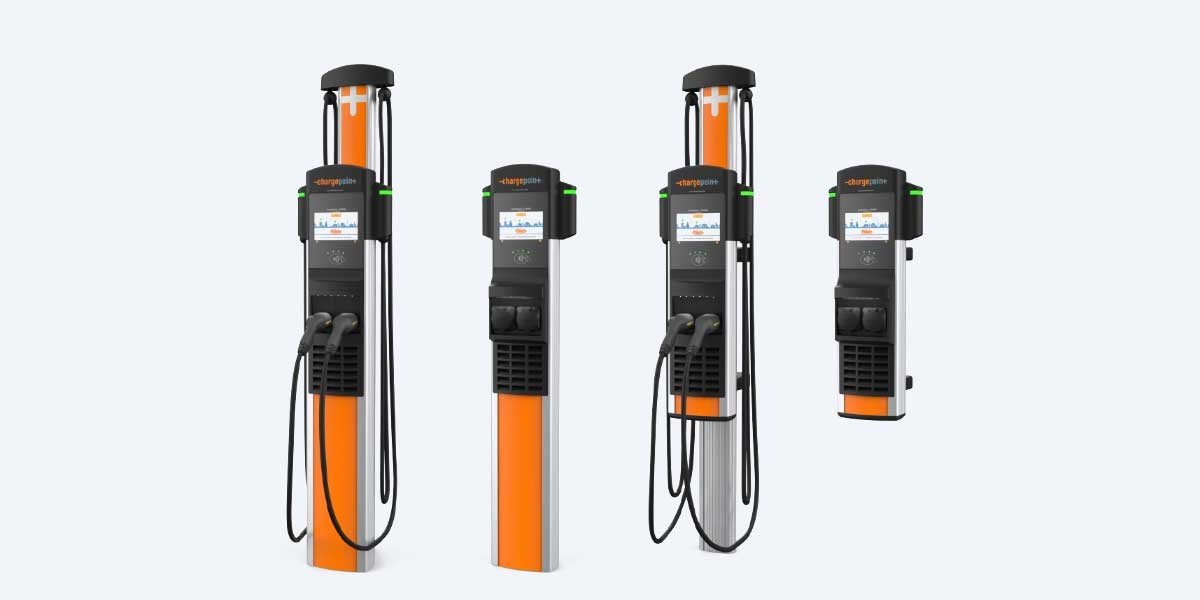
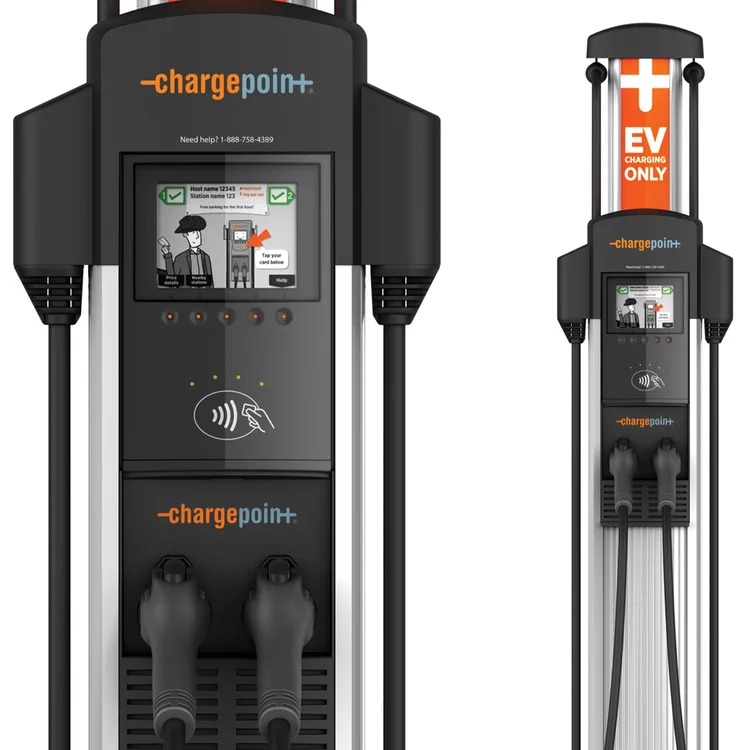
Many commercial-grade ChargePoint stations—AC and DC—include full-color LCD screens that can show custom content. For example:
-
CT4000 AC stations feature a 5.7-inch color LCD capable of full-motion video and custom branding.
-
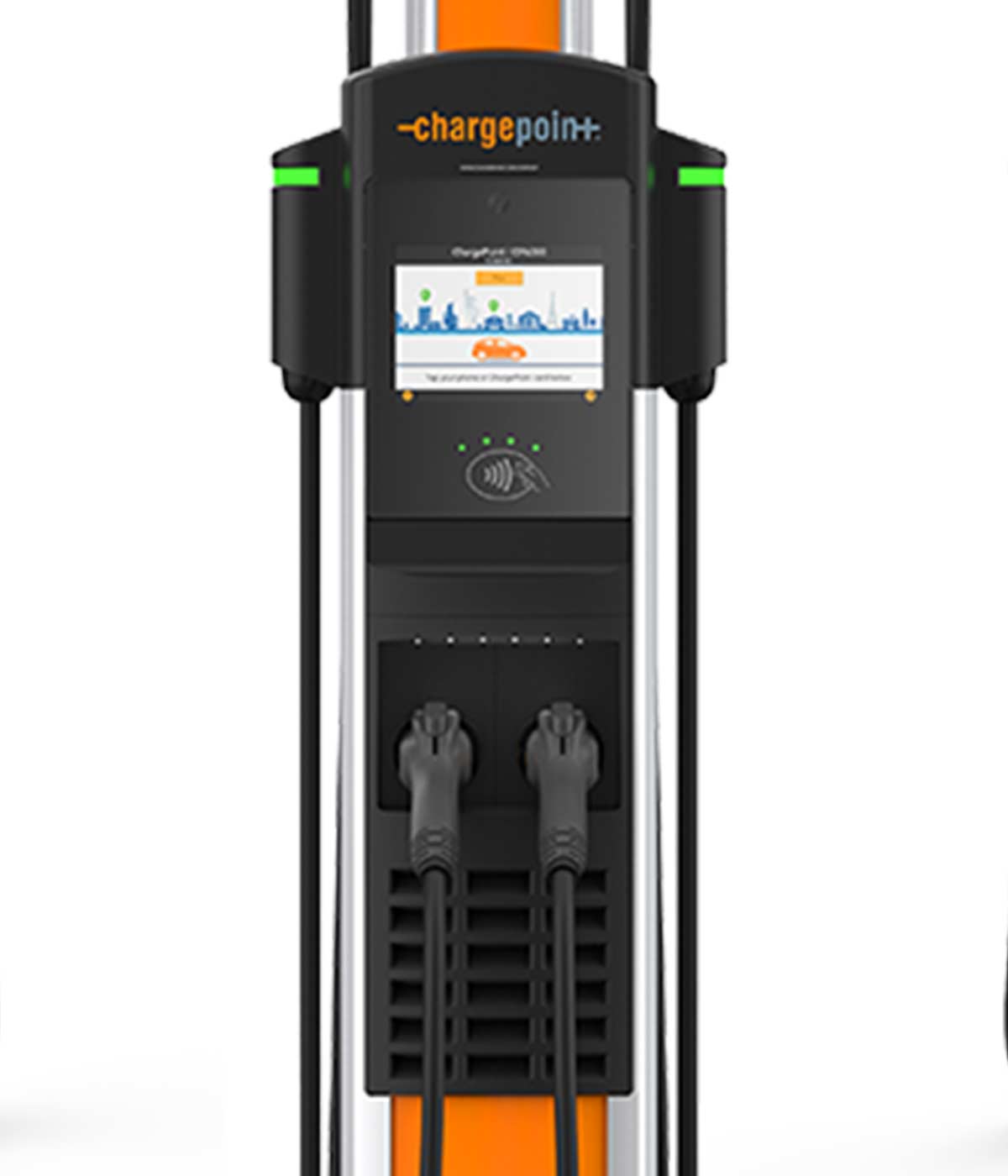
CP6000 series AC chargers support charger-screen advertising, videos and custom signage, allowing you to show offers, messages and brand content right on the charger.
-
ChargePoint has also announced a digital advertising network to roll out high-resolution screens at selected AC and DC sites in high-traffic retail locations, in partnership with digital media firms.
What you can do with charger screens
From a site host’s perspective, screens can be used for:
-
House ads & promotions
-
Highlight in-store specials, seasonal sales, loyalty sign-ups, or restaurant/bar offers while drivers wait.
-
-
Branding & sponsorship
-
Reinforce your logo, colors and messaging on station panels and screen content.
-
-
Community outreach (ideal for non-profits and public agencies)
-
Promote health campaigns, local events, public meetings, voter registration reminders, safe-driving and climate messages.
-
-
Third-party advertising (where supported)
-
Some digital-out-of-home (DOOH) providers and EV media networks let site hosts earn a share of ad revenue from branded content displayed at chargers, adding a modest but growing revenue stream.
-
Several DOOH specialists (Broadsign, Screenverse, others) explicitly promote EV charging screens as a way for retailers and site hosts to offset operating costs and generate an additional revenue line.
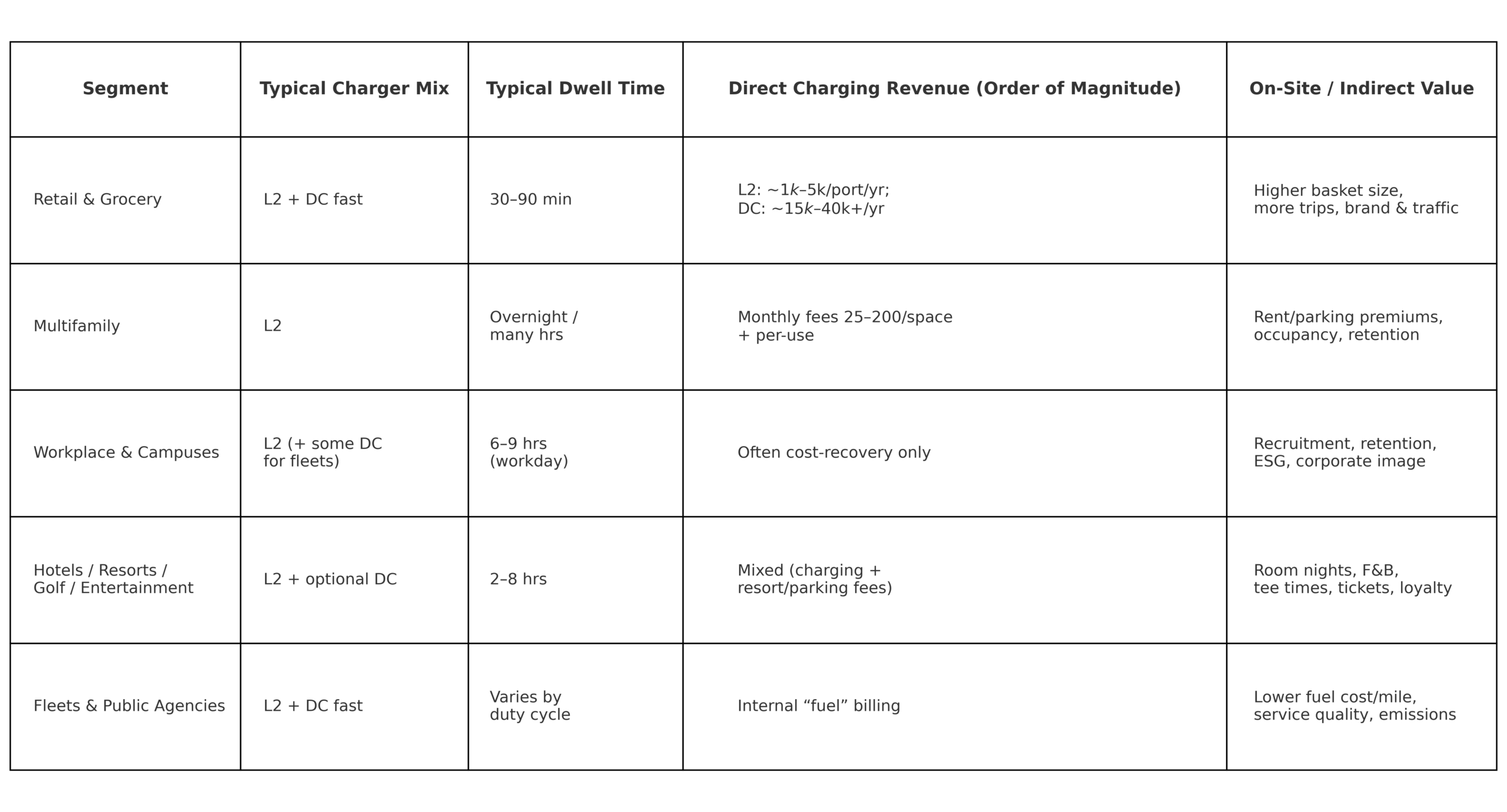
Retail & Grocery
-
Charger mix: Level 2 near prime spots + DC fast on outer rows or travel-oriented bays
-
Direct charging revenue:
-
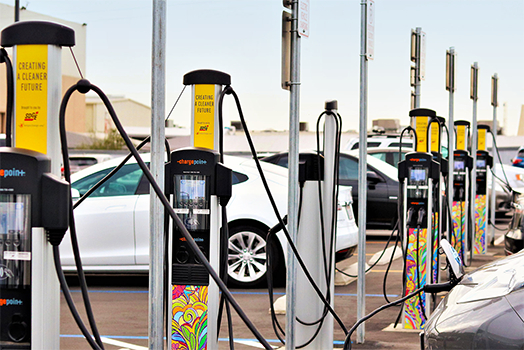
L2: commonly ~$1k–$5k per port per year in busy public settings
-
DC fast: ~$15k–$40k+ per charger per year in good locations
-
-
In-store revenue:
-
EVgo: 80% of drivers shop and spend ~$42 per visit at retail fast-charging sites.
-
Consumer Reports: L2 chargers at a big retailer added ~50 minutes dwell and $1/minute in incremental spend for charging customers.
-
Multifamily (Apartments & Condos)
-
Charger mix: Mostly Level 2 assigned to residents; some shared visitor ports
-
Revenue model:
-
Monthly EV parking premiums + usage charges
-
Often leads to higher overall NOI via rent premiums and better occupancy.
-
Workplace & Campuses
-
Charger mix: Mostly Level 2 for all-day parking; occasional DC for fleet vehicles or executives
-
Revenue model:
-
Cost recovery rather than profit, but big HR and ESG benefits
-
-
Value:
-
Lower turnover, easier recruitment, and visible sustainability leadership.
-
Hotels, Resorts, Golf & Entertainment
-
Charger mix:
-
Level 2 for overnight or 3–4 hour stays
-
Optional DC fast for high-end guests or corridor traffic
-
-
Revenue model:
-
Per-kWh or per-session pricing, premium parking, bundled resort fees
-
-
Value:
-
Captures room nights, F&B, tee times, spa, and ticket revenue during long dwell times.
-
Fleets & Public Agencies
-
-
Charger mix: Level 2 at depots + DC fast for rapid turns or public corridors
-
Revenue model:
-
Mostly internal fuel savings rather than public charging fees
-
-
Value:
-
Lower fuel cost per mile, reduced emissions and higher service reliability for communities.
-
-
Reality check: ads are a bonus, not the whole business
Some all-ads-all-the-time models have struggled. Volta, a pioneer in ad-supported EV charging with large digital screens, was acquired and later shut down by Shell, illustrating that advertising alone may not fully fund charging infrastructure at scale.
However, for ChargePoint-based sites:
-
Screen-based advertising and messaging can still be a useful extra revenue and engagement channel, especially in retail and high-traffic locations.
-
Even if you never sell external ads, using the screens for house promotions, event marketing and non-profit outreach can significantly increase the business and mission impact of each charging session.
For CP EV Charger customers, the big picture is:
Charging revenue + in-store revenue + brand lift + optional media revenue
= a much stronger total return than selling kWh alone.

Evidence that EV chargers increase property value
Commercial property and sustainability sources highlight several drivers:
-
Properties with EV charging “tend to appraise at higher values” because they’re more attractive, more future-proof and aligned with green building standards.
-
EV-ready infrastructure improves lease-up and tenant quality, especially for modern office, retail and multifamily assets.
-
Residential studies suggest homes with EV charging or strong EV-readiness can command higher sale prices in EV-heavy markets.
How this shows up in your numbers
EV charging can:
-
Add direct NOI (charging fees, parking/amenity premiums, advertising revenue)
-
Improve occupancy and retention
-
Support higher rents or room rates
-
Reduce risk of future code-related retrofit costs
Since commercial asset value is largely NOI ÷ cap rate, even modest additional NOI plus a small perceived risk reduction can lift value by six or seven figures for larger centers or portfolios.
When you go to sell, you can show:
-
Actual charger usage and revenue history
-
Evidence of in-store/basket lift or rent premiums
-
Clear “EV-ready” positioning, plus any integrations with networks and media partners — all of which support a stronger offering memorandum.
Quick reference table: